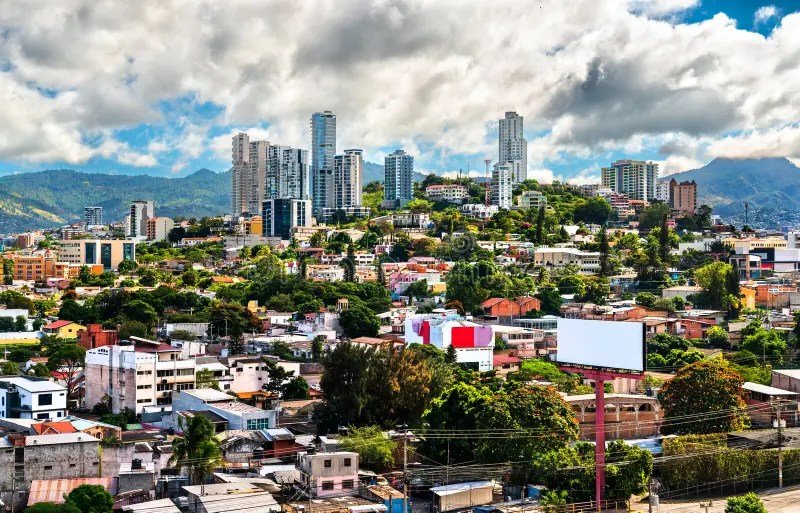
Navigating time zones can often feel like a puzzle, especially when planning travel or remote work across international borders. But when it comes to synchronizing your watch with the vibrant rhythms of major Honduran cities like Tegucigalpa, San Pedro Sula, or the idyllic island of Roatán, you’re in for a pleasant surprise: it's refreshingly straightforward.
Forget complex calculations or the annual headache of Daylight Saving Time; Honduras operates on a single, unwavering clock. This guide cuts through the noise to deliver everything you need to know about Time in Major Honduran Cities (Tegucigalpa, San Pedro Sula, Roatán), ensuring you're always precisely on schedule, whether you're landing at Toncontín International Airport (TGU) or diving off the coast of Utila.
At a Glance: Time in Honduras
- Current Time: 8:53 pm CST, Friday, February 6, 2026 (based on ground truth).
- Standard Time Zone: Central Standard Time (CST).
- UTC/GMT Offset: UTC-6:00 hours.
- Daylight Saving Time (DST): Honduras does not observe DST. The time remains constant year-round.
- One Country, One Time: All cities, from the capital Tegucigalpa to the Caribbean island of Roatán, share the same time zone.
- International Dial Code: +504.
The Unchanging Clock: Honduras' Single Time Zone Advantage
Imagine a country where you never have to ask, "What time zone are we in?" That's Honduras. The entire nation, from its bustling capital, Tegucigalpa, nestled in the central highlands, to the industrial heartland of San Pedro Sula in the Sula Valley, and out to the stunning Bay Islands like Roatán, operates under one unified time zone: Central Standard Time (CST).
This uniformity is a godsend for travelers, business professionals, and anyone needing to coordinate across different parts of the country. You won't find yourself adjusting your watch as you travel between cities or wondering if a meeting scheduled for 3 PM in La Ceiba is the same 3 PM in Guanaja. It simplifies everything, making travel planning and communication remarkably seamless.
CST: Understanding UTC-6:00
Central Standard Time (CST) is a standard time zone that is 6 hours behind Coordinated Universal Time (UTC). This is often expressed as UTC-6:00 or GMT-6:00.
What does this mean in practical terms?
- If it's noon (12:00 PM) UTC, it's 6:00 AM CST in Honduras.
- If you're in New York (Eastern Standard Time, EST, which is UTC-5 during standard time), Honduras is one hour behind you. When it's 10:00 AM EST, it's 9:00 AM CST in Tegucigalpa.
- If you're in Los Angeles (Pacific Standard Time, PST, which is UTC-8), Honduras is two hours ahead of you. When it's 10:00 AM PST, it's 12:00 PM CST in San Pedro Sula.
This consistent offset makes it straightforward to convert times, especially if you're frequently dealing with international schedules. For a broader view of the entire nation's clock, you can always check the Current time in Honduras.
Why No Daylight Saving Time? A Stable Approach
One of the most appealing aspects of Honduran timekeeping is its resolute rejection of Daylight Saving Time (DST). While many countries, including parts of North America and Europe, adjust their clocks forward in spring and backward in autumn, Honduras maintains its CST (UTC-6) status all year round.
This stability offers several advantages:
- Predictability: No more confusion about "spring forward" or "fall back." The time in Tegucigalpa on January 1st is the same as it is on July 1st.
- Simplified Scheduling: For businesses, airlines operating through Ramón Villeda Morales International Airport (SAP) or Juan Manuel Gálvez International Airport (RTB), and international organizations, this consistency removes a layer of logistical complexity.
- Biological Rhythm: Many residents appreciate the natural rhythm of a consistent clock, avoiding the minor disruptions to sleep and daily routines that DST changes can bring.
Honduras isn't alone in this; many equatorial countries find DST less beneficial as their daylight hours don't vary significantly enough throughout the year to warrant a clock adjustment.
Navigating Time in Specific Honduran Cities
While the time zone is consistent across the board, understanding the specific context of Honduras's key cities can help you better appreciate your visit or business dealings.
Tegucigalpa: The Capital's Constant Clock
As the capital city, Tegucigalpa is the heart of Honduras's political and administrative life. Its time is synonymous with the nation's time: CST (UTC-6). When you're planning a meeting with government officials or exploring the historic center, you're on the same clock as everyone else in the country. Toncontín International Airport (TGU) also adheres to this strict time.
San Pedro Sula: The Industrial Engine's Schedule
San Pedro Sula, often considered the industrial and economic engine of Honduras, operates on the same CST (UTC-6) schedule. Businesses here thrive on punctuality, and the uniform time zone facilitates smooth operations, whether you're dealing with logistics at Ramón Villeda Morales International Airport (SAP) or coordinating supply chains across the region. This consistency is crucial for both local commerce and international trade.
Roatán: Island Time, but Not Different Time
The beautiful island of Roatán, a premier destination in the Bay Islands, offers a unique blend of "island time" philosophy and strict time zone adherence. While the pace of life might feel more relaxed, the clocks here precisely follow CST (UTC-6). So, whether you're planning a diving excursion, booking a catamaran tour, or catching a flight from Juan Manuel Gálvez International Airport (RTB), your watch will be in perfect sync with the mainland. This ensures seamless connections and communication with the rest of Honduras.
Practical Tips for Travelers and Business Professionals
Understanding Honduras's time zone is the first step; applying that knowledge effectively is next.
For International Travelers:
- Adjust Upon Arrival: Set your devices to CST (UTC-6) as soon as you land. Most smartphones will do this automatically if you enable location services.
- Double-Check Flight Times: While airports like TGU, SAP, and RTB operate on CST, always confirm your departure and arrival times in the local time zone to avoid any last-minute rushes or missed flights.
- Cross-Reference with Home Time: If you're coordinating with friends or family back home, be mindful of the fixed UTC-6 offset. Use online time zone converters if you're dealing with multiple time zones.
- Embrace the Simplicity: Enjoy not having to worry about DST! What you see on the clock is what you get, year-round.
For Business Professionals:
- Clear Communication: When scheduling international calls or virtual meetings, always specify "CST (Honduras)" or "UTC-6" to avoid ambiguity, especially with partners in regions that observe DST.
- Holiday Awareness: While time remains constant, be aware of Honduran national holidays, which can impact business operations. Upcoming holidays in 2026 include Father's Day (Mar 19), March Equinox (Mar 20), and Maundy Thursday (Apr 2). These can mean offices are closed or operating on reduced hours.
- Software Settings: Ensure your scheduling software and calendars are correctly configured for CST (UTC-6) for Honduras to prevent booking conflicts.
Common Time Misconceptions About Honduras
Despite its straightforward time zone, a few myths or common points of confusion sometimes surface:
- "Does Roatán have its own time zone?" No. While Roatán certainly has its own relaxed vibe, it strictly observes CST (UTC-6), just like Tegucigalpa and San Pedro Sula. All of Honduras shares one time zone.
- "Honduras changes for Daylight Saving Time, right?" Incorrect. Honduras does not, and has not, observed Daylight Saving Time. The country remains on CST (UTC-6) year-round, offering consistent timing regardless of the season.
- "Is CST the same as Central Daylight Time (CDT)?" No. CST is UTC-6. CDT (Central Daylight Time) is UTC-5 and is observed by countries/regions during their Daylight Saving period. Since Honduras doesn't observe DST, it never switches to CDT; it always remains on CST.
Time Zone Comparisons: How Honduras Stacks Up
To put Honduras's time into perspective, here's a quick comparison with some major international time zones:
- To UTC/GMT: Honduras is 6 hours behind UTC/GMT. (e.g., UTC 12:00 PM = Honduras 6:00 AM)
- To US Eastern Standard Time (EST/EDT): Honduras is 1 hour behind EST, and 2 hours behind EDT (when DST is observed in the US).
- When it's 10:00 AM EST (standard time), it's 9:00 AM in Honduras.
- When it's 10:00 AM EDT (Daylight Saving Time), it's 8:00 AM in Honduras.
- To US Central Standard Time (CST/CDT): Honduras is typically on the same time as US CST, and 1 hour behind US CDT (when DST is observed in the US).
- When it's 10:00 AM US CST (standard time), it's 10:00 AM in Honduras.
- When it's 10:00 AM US CDT (Daylight Saving Time), it's 9:00 AM in Honduras.
- To US Mountain Standard Time (MST/MDT): Honduras is 1 hour ahead of MST, and on the same time as MDT (when DST is observed in the US).
- When it's 10:00 AM US MST (standard time), it's 11:00 AM in Honduras.
- When it's 10:00 AM US MDT (Daylight Saving Time), it's 10:00 AM in Honduras.
- To US Pacific Standard Time (PST/PDT): Honduras is 2 hours ahead of PST, and 3 hours ahead of PDT (when DST is observed in the US).
- When it's 10:00 AM US PST (standard time), it's 12:00 PM in Honduras.
- When it's 10:00 AM US PDT (Daylight Saving Time), it's 11:00 AM in Honduras.
- To London (GMT/BST): Honduras is 6 hours behind GMT, and 7 hours behind BST (when DST is observed in the UK).
- When it's 3:00 PM GMT, it's 9:00 AM in Honduras.
- When it's 3:00 PM BST, it's 8:00 AM in Honduras.
These comparisons highlight how crucial it is to consider DST when dealing with countries that observe it, but for Honduras, you only ever need to remember the consistent UTC-6.
Final Thoughts: Embrace Honduran Time
Whether you're visiting for business, pleasure, or looking to relocate, the simplicity of time in Tegucigalpa, San Pedro Sula, and Roatán is a welcome detail. The consistent Central Standard Time (UTC-6) across the entire nation, coupled with the absence of Daylight Saving Time, means less fuss and more focus on what truly matters: experiencing the vibrant culture, breathtaking landscapes, and welcoming people of Honduras.
So go ahead, set your watch once, and enjoy the peace of mind that comes with knowing you’re always on perfect Honduran time.