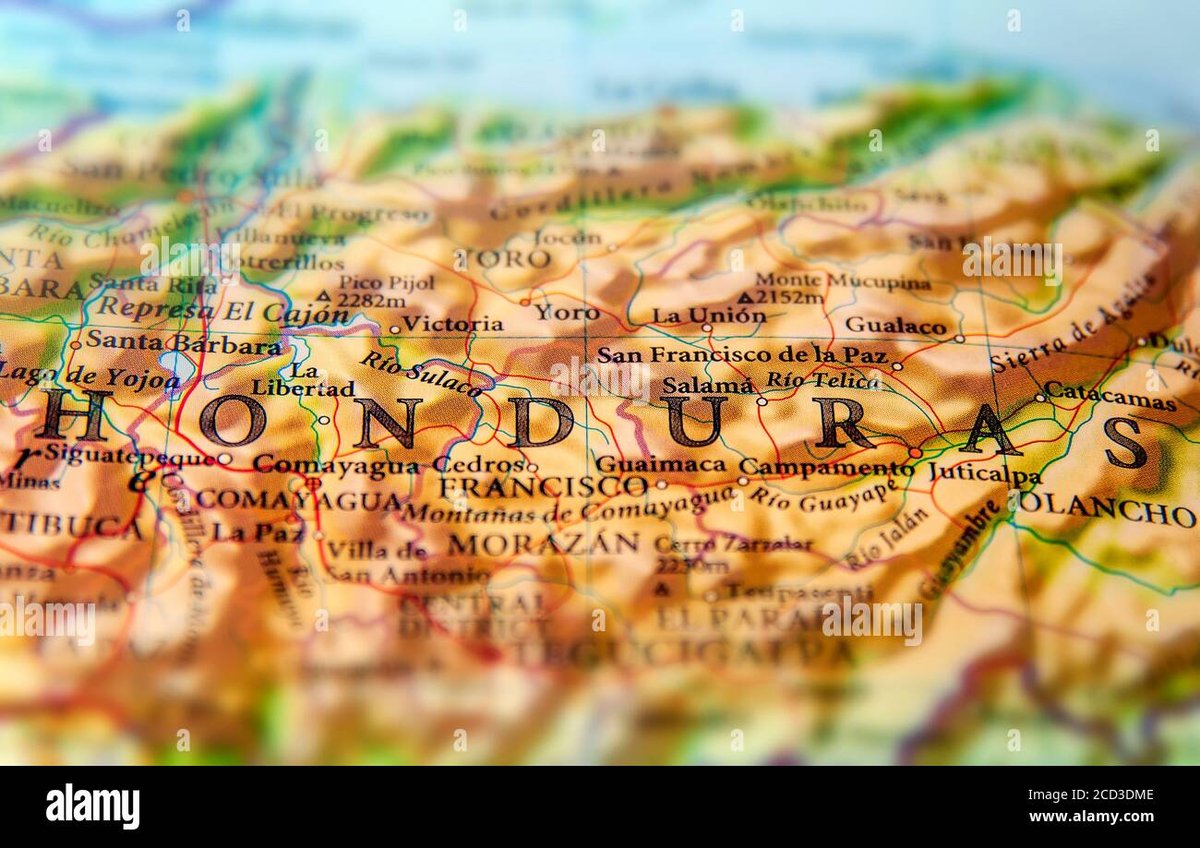
Navigating international travel or business can often feel like solving a complex puzzle, and time zones are a crucial piece. For those looking to connect with, visit, or understand Honduras, there's a refreshing simplicity awaiting you: the nation operates on a single, unwavering time zone. This consistency, rooted in the historical and geographic context of Honduras' time zone, makes planning straightforward, eliminating the annual confusion that plagues many other parts of the world.
Honduras is one of those sensible places that keeps things simple, opting out of the biannual clock shifts that come with Daylight Saving Time (DST). From the bustling streets of Tegucigalpa to the tranquil shores of the Bay Islands, the entire country adheres to Central Standard Time (CST), a fixed offset from Coordinated Universal Time (UTC-6). This means Honduras is always precisely six hours behind UTC, every single day of the year.
At a Glance: Key Takeaways for Honduras Time
- Consistent Time: Honduras observes Central Standard Time (CST) year-round.
- No Daylight Saving Time: Clocks never change.
- UTC Offset: Always UTC-6 (six hours behind Coordinated Universal Time).
- Regional Alignment: Shares its time zone with neighbors like Belize, Guatemala, El Salvador, and Nicaragua, simplifying regional travel and commerce.
- Traveler's Best Practice: Always confirm "CST" when scheduling to avoid any ambiguity.
- Key Tool: Use online time zone converters for international comparisons.
Why No Time Changes? The Geographic Logic Behind Honduras' Time Zone
The decision not to observe Daylight Saving Time isn't arbitrary; it’s deeply rooted in Honduras's geographic position. Lying firmly within the tropics, close to the equator, Honduras experiences very little variation in daylight hours throughout the year. Unlike countries at higher latitudes, where summer days are significantly longer than winter days, the length of daylight in Honduras remains relatively constant.
Think about it: in London or New York, the sun might set at 4 PM in winter and 9 PM in summer. Shifting the clocks helps "optimize" usable daylight. In Honduras, however, the sun typically rises and sets around 6 AM and 6 PM year-round, give or take an hour depending on the exact date. There's simply no compelling natural advantage to be gained by artificially moving the clocks forward or backward. The consistent rhythm of dawn and dusk eliminates the historical rationale for DST.
This tropical latitude is a primary driver for the consistency you’ll find across much of Central America. For instance, if you're comparing Honduras vs. El Salvador time zone, you'll find they are perfectly aligned, both observing CST (UTC-6) without DST. This regional uniformity speaks volumes about the shared geographic reality and practical approach to timekeeping.
Understanding UTC-6: What It Means in Practice
Central Standard Time (CST) at UTC-6 means that when it's noon in London (which would be UTC+0 or GMT), it's 6 AM in Honduras. This simple, fixed offset is a blessing for international planners. There's no need to constantly recalculate based on whether another country is currently observing DST or not.
This consistent UTC-6 status places Honduras firmly within a well-recognized global time corridor. You'll find that other countries in Central America like Belize, Guatemala, El Salvador, and Nicaragua share this exact time zone. Even within larger nations, parts of Mexico, specific regions of Canada, and the central United States (think cities like Chicago and Dallas) operate on CST for at least part of the year. This broad regional alignment often simplifies cross-border business and communication.
For instance, when considering Honduras' diverse weather and climate, this consistent timekeeping influences everything from daily work schedules to market openings, as the rhythm of life doesn't get disrupted by abrupt clock changes. Businesses, schools, and social activities can maintain predictable schedules without the annual adjustment period.
Historical Simplicity: Why Honduras Never Adopted DST
The historical narrative behind Honduras's consistent time zone is largely one of omission and practicality. Many countries that adopted DST did so during wartime (like World War I or II) to save energy, or later, to boost economic activity and leisure time. However, for a country like Honduras, located in a region where daylight hours are stable, these arguments hold less sway.
The energy savings from DST are often marginal in tropical zones because lighting needs don't change dramatically with an hour's shift. Furthermore, the disruption to daily routines, agriculture, and local commerce often outweighs any perceived benefits. Indigenous and traditional lifestyles, which are deeply connected to the natural rhythm of the sun, would find DST an unnecessary complication.
Essentially, Honduras (and many of its neighbors) simply never found a compelling reason to introduce the complexity of DST into its timekeeping. The existing system worked, was aligned with natural light patterns, and avoided the logistical headaches of biannual changes. This historical decision reinforces the nation's practical approach to daily life.
Time Zone Differences: What You Need to Know for Global Connections
While Honduras keeps things simple, the rest of the world might not. Understanding how Honduras's UTC-6 time zone interacts with other major global hubs is critical for anyone planning calls, meetings, or travel.
Let's break down some common comparisons:
North America
- New York City (Eastern Time - ET): New York is typically one hour ahead of Honduras when NYC is on Eastern Daylight Time (EDT, UTC-4). During Eastern Standard Time (EST, UTC-5), New York is two hours ahead. This fluctuating difference is precisely why clarifying "CST" for Honduras is so important.
- Los Angeles (Pacific Time - PT): Los Angeles is always two hours behind Honduras (PST/PDT is UTC-8/UTC-7). So, if it's 3 PM CST in Honduras, it's 1 PM PT in Los Angeles.
- Mexico City (Central Time - CT, sometimes CDT/CST): While parts of Mexico observe CST, Mexico City itself generally observes Central Time and also uses DST. This can lead to periods where it aligns with Honduras and periods where it doesn't, underscoring the need for verification.
Europe & Africa
- London (Greenwich Mean Time/British Summer Time - GMT/BST): London is typically five or six hours ahead of Honduras. When London is on GMT (UTC+0), it's six hours ahead. When it shifts to BST (UTC+1), it's five hours ahead. This is a significant difference to manage. If it's 10 AM CST in Honduras, it's 4 PM GMT or 3 PM BST in London.
Asia & Oceania
- Tokyo (Japan Standard Time - JST): Tokyo is a substantial fifteen hours ahead of Honduras (JST is UTC+9). If you're scheduling a 9 AM meeting in Tegucigalpa, it's already midnight the next day in Tokyo. This vast difference requires careful planning to find overlapping business hours.
- Sydney (Australian Eastern Standard Time/Daylight Time - AEST/AEDT): The difference here is even larger, ranging from fifteen to sixteen hours ahead of Honduras.
These stark differences highlight why relying on "local time" isn't enough when communicating internationally.
Practical Guidance for Navigating Honduran Time
The simplicity of Honduras's time zone makes your job easier, but only if you follow a few best practices. For anyone involved in business, tourism, or personal connections, mastering time zone coordination is paramount.
Always Clarify "CST"
When setting meeting times, flight schedules, or even just telling a friend when you'll call, don't just say "3 PM." Specify "3 PM CST." This removes all ambiguity, especially for those in regions that observe DST. A quick, clear specification like, "Let's connect at 10 AM CST" ensures everyone is on the same page, whether they're in New York, London, or even another part of Central America.
Leverage Time Zone Converters
For international scheduling, online time zone converters are your best friend. Tools like World Time Buddy, Time and Date, or even a simple Google search ("time in Honduras vs. London") provide instant, accurate calculations. This eliminates human error and provides a visual representation of time differences across multiple locations. This is an essential habit for anyone trying to figure out What time is it in Honduras? in relation to their own location.
Consider Honduran Business Hours
While the time zone is fixed, standard business hours still apply. Most businesses in Honduras operate Monday to Friday, typically from 8 AM to 5 PM, often with a lunch break around noon or 1 PM. Government offices and banks may have slightly different hours, usually closing earlier. When planning calls or virtual meetings, aim for windows that comfortably fit within these local working hours. This shows respect for local rhythms and maximizes the chances of successful communication, particularly if you're engaging with Honduras' economic landscape.
Pay Attention to Travel Notations
When booking flights or coordinating ground transportation for travel, confirm all arrival and departure times are clearly specified in local time. Airport and airline systems are usually accurate, but a quick double-check can prevent missed connections or unnecessary stress. If a flight arrives at "10 AM," verify that this is 10 AM Honduran CST. This proactive approach is part of navigating Honduras as a traveler smoothly.
Be Mindful of Cultural Pace
While punctuality is generally valued in professional settings, it's also worth noting that the cultural pace in Honduras can be somewhat more relaxed than in highly time-driven Western cultures. Meetings might start a few minutes late, or conversations might take a more circuitous route before getting to the point. This isn't an excuse for you to be late but rather a subtle reminder to build a little buffer into your schedule and to practice patience. Understanding understanding Honduran cultural nuances often includes appreciating this aspect of time.
Common Questions About Honduran Time Answered
Let's tackle some frequently asked questions that come up when discussing time in Honduras.
Does Honduras ever change its time?
No, Honduras does not observe Daylight Saving Time (DST). Its clocks remain on Central Standard Time (CST), which is UTC-6, all year round.
Is the entire country of Honduras on the same time zone?
Yes, the entire country of Honduras, including its capital Tegucigalpa, San Pedro Sula, La Ceiba, and the popular Bay Islands (like Roatán), observes a single, consistent time zone: Central Standard Time (CST, UTC-6).
Why doesn't Honduras use Daylight Saving Time?
Honduras is located close to the equator, within the tropics. This geographic position means that daylight hours do not fluctuate significantly between seasons. The practical benefits of shifting clocks (like energy saving or extended evening daylight) are minimal, while the disruption to daily routines, agriculture, and local commerce would be considerable. As such, there's no strong incentive to adopt DST.
What's the difference between Honduras time and CST in the US?
Honduras time is always Central Standard Time (CST, UTC-6). In the United States, states that observe CST often switch to Central Daylight Time (CDT, UTC-5) during the summer months. Therefore, during the summer, parts of the US that typically use CST will be one hour ahead of Honduras. In the winter, when they revert to CST, their time will align perfectly with Honduras. This fluctuation is why specifying "CST" for Honduras is crucial.
How many hours ahead or behind is Honduras from other major cities?
- New York City: 1 or 2 hours ahead (depending on DST in NYC).
- London: 5 or 6 hours ahead (depending on DST in London).
- Tokyo: 15 hours ahead.
- Los Angeles: 2 hours behind.
Always verify current times with a converter for absolute accuracy.
The Simplicity Advantage: Making Your Honduras Experience Smoother
The consistent time zone in Honduras is more than just a fact; it's a practical advantage. It simplifies logistical planning, reduces miscommunication, and contributes to a more predictable rhythm of life within the country. For anyone engaging with Honduras, whether for tourism, business, or personal connections, embracing this straightforward approach to time is your first step towards seamless interaction.
Forget the mental gymnastics of shifting clocks; in Honduras, what you see is what you get, 365 days a year. This predictability allows you to focus on the vibrant culture, breathtaking landscapes, and warm hospitality that define this Central American nation, rather than wrestling with your watch. Plan with confidence, specify your times, and enjoy the ease that comes with a nation in sync, all the time.