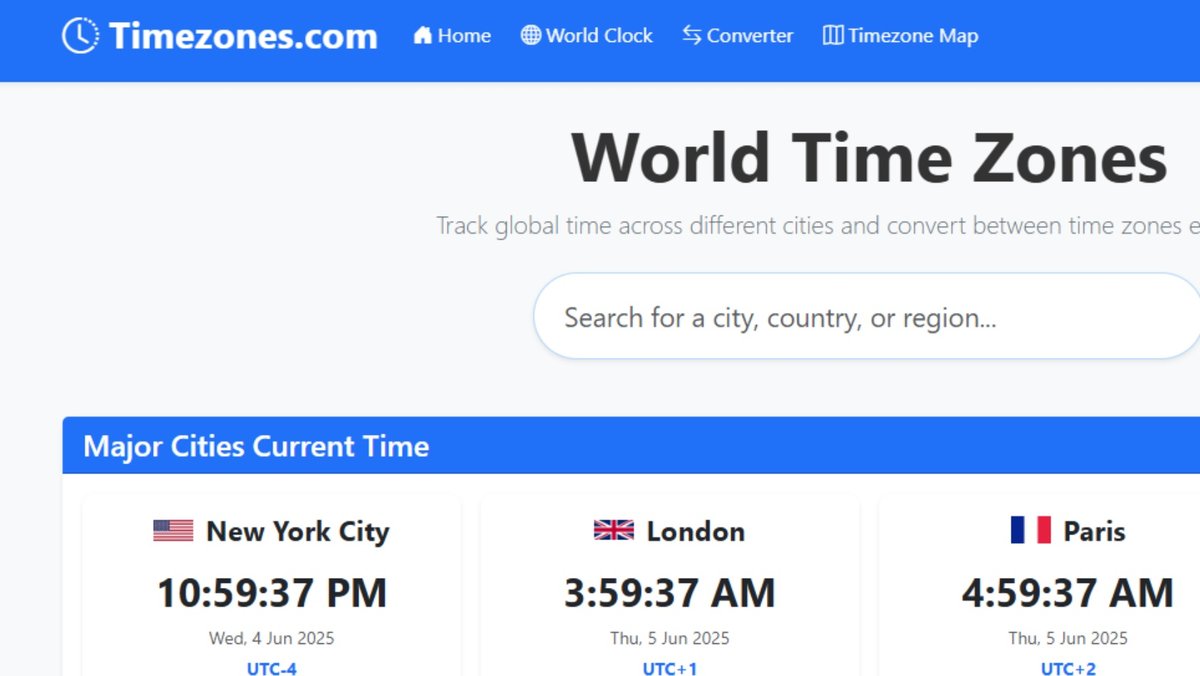
Ever found yourself staring at your phone, trying to coordinate a call with a friend in Tegucigalpa or planning a virtual meeting with a business partner in San Pedro Sula? Knowing the Current Time in Honduras (Real-time) is more than just a convenience—it's essential for seamless communication and effective planning. In a world where global connections are the norm, understanding and accurately tracking local time, especially in a country like Honduras with its unique time zone characteristics, prevents missed appointments, ensures timely deliveries, and fosters genuine connection.
This guide cuts through the confusion, offering you an authoritative yet straightforward understanding of Honduras's time, how to track it in real-time, and practical tips for navigating time differences without a hitch. Consider this your definitive resource for mastering the clock in the heart of Central America.
Honduras Time at a Glance: What You Need to Know Immediately
Before we dive deep, here's a quick rundown of the most crucial facts about the current time in Honduras:
- Time Zone: Honduras consistently observes Central Standard Time (CST).
- UTC Offset: CST is UTC-6 (Coordinated Universal Time minus 6 hours).
- Daylight Saving Time (DST): Honduras does not observe Daylight Saving Time. The time remains UTC-6 year-round.
- Real-time Check: The most accurate way to get the current time is through reliable online tools or your smartphone's world clock function, as these sync continuously.
- Consistency: Unlike many countries, Honduras's time zone doesn't change seasonally, simplifying calculations once you know its offset.
Unpacking Honduras's Consistent Time Zone: Central Standard Time (CST)
Honduras is situated firmly within the Central Standard Time zone, often abbreviated as CST. This means that throughout the entire country, from its Caribbean coastlines to its mountainous interior, everyone operates on the same time, six hours behind Coordinated Universal Time (UTC).
What does UTC-6 mean in practical terms? It signifies that if it's 12:00 PM (noon) UTC, it would be 6:00 AM in Honduras. This fixed offset provides a stable reference point for anyone needing to synchronize with Honduras, whether for business, travel, or personal communication.
A Steady Clock: Why No Daylight Saving?
One of the most significant aspects of Honduras's time-keeping is its non-observance of Daylight Saving Time (DST). While many countries, particularly those further from the equator, adjust their clocks forward an hour in spring and back an hour in autumn to maximize daylight, Honduras does not.
Why this choice? Geographically, Honduras is relatively close to the equator. Countries in equatorial regions experience less seasonal variation in daylight hours compared to those at higher latitudes. The sun rises and sets at roughly the same time throughout the year, meaning the practical benefits of shifting the clock for DST are minimal. This consistency simplifies international scheduling and eliminates the seasonal confusion that often accompanies DST changes elsewhere. So, whether it's January or July, the local time in Honduras always remains UTC-6.
Why "Real-Time" Isn't Just a Buzzword: The Dynamic Nature of Time-Keeping
When we talk about the "current time in Honduras (real-time)," we're emphasizing that precise moment now. While the underlying time zone (CST, UTC-6) is fixed, the actual clock face continually advances. A static lookup might tell you the time zone, but real-time data gives you the exact hour, minute, and second.
Think of it this way: knowing that Honduras is UTC-6 is like knowing the speed limit on a highway. It's a rule. But knowing the real-time speed means knowing exactly how fast you're going at this precise instant. For scheduling a video conference, making a critical phone call, or catching a flight, you need the dynamic, accurate current time. Your devices and online services achieve this by constantly synchronizing with atomic clocks, ensuring their displayed time is as precise as possible, factoring in any network latency.
For anyone needing to quickly ascertain the Current time in Honduras, relying on these real-time sources is always the best practice.
Your Go-To Tools for Instant Honduras Time Updates
In today's interconnected world, getting the current time in Honduras is easier than ever. Forget complex calculations or dusty atlases; a few clicks or a simple voice command can give you the precise local time.
The Power of Search Engines
The fastest and often most reliable method is to simply ask your favorite search engine. Type "current time in Honduras" or "what time is it in Tegucigalpa?" into Google, Bing, or DuckDuckGo. The search results page will almost instantly display the exact local time, often synchronized to the second. These results are typically pulled from highly accurate time servers, making them incredibly dependable.
Dedicated Time Zone Websites
Several websites specialize in providing accurate, real-time local times for cities and countries worldwide. Sites like Worldometers.info (which confirms Honduras's time) and World Time Server are excellent resources. They often offer additional information such as sunrise/sunset times, the time zone name, and quick comparisons to other major cities. These platforms are designed for precision and are updated continuously.
Smartphone Smarts: World Clock Features
Your smartphone is a powerful time-tracking tool. Both iOS and Android devices come with built-in "World Clock" or "Clocks" applications. You can easily add Tegucigalpa, San Pedro Sula, or simply "Honduras" to your list of monitored cities. Your phone will automatically display the current local time for Honduras, constantly updating and adjusting as you travel or as minutes tick by. This is especially convenient for those who frequently interact with people in different time zones.
Virtual Assistants: Siri, Google Assistant, Alexa
For hands-free convenience, your virtual assistant is ready to help. A simple voice command like "Hey Siri, what time is it in Honduras?" or "Okay Google, what's the local time in San Pedro Sula?" will prompt your assistant to speak the current time aloud. This can be incredibly useful when you're multitasking or can't easily look at a screen.
Bridging the Gap: Understanding Time Differences with Honduras
While knowing Honduras is UTC-6 is a great start, the real challenge often comes in converting that to your local time, especially when Daylight Saving Time is in play elsewhere. Let's break down some common comparisons.
North America: The Central Standard Time (CST) Connection
- Eastern Standard Time (EST/EDT - UTC-5/UTC-4):
- When Eastern US cities (like New York, Miami, Toronto) are on EST (UTC-5), Honduras is 1 hour behind them. (e.g., NY 10 AM, Honduras 9 AM).
- When Eastern US cities switch to EDT (UTC-4) for Daylight Saving, Honduras becomes 2 hours behind them. (e.g., NY 10 AM, Honduras 8 AM). This bi-annual shift is a major source of confusion.
- Central Standard Time (CST/CDT - UTC-6/UTC-5):
- When Central US cities (like Chicago, Houston) are on CST (UTC-6), Honduras is on the same time. (e.g., Chicago 10 AM, Honduras 10 AM).
- When Central US cities switch to CDT (UTC-5) for Daylight Saving, Honduras becomes 1 hour behind them. (e.g., Chicago 10 AM, Honduras 9 AM).
- Mountain Standard Time (MST/MDT - UTC-7/UTC-6):
- When Mountain US cities (like Denver, Phoenix) are on MST (UTC-7), Honduras is 1 hour ahead. (e.g., Denver 9 AM, Honduras 10 AM).
- When Mountain US cities switch to MDT (UTC-6) for Daylight Saving, Honduras is on the same time. (e.g., Denver 9 AM, Honduras 9 AM).
- Pacific Standard Time (PST/PDT - UTC-8/UTC-7):
- When Pacific US cities (like Los Angeles, Seattle) are on PST (UTC-8), Honduras is 2 hours ahead. (e.g., LA 8 AM, Honduras 10 AM).
- When Pacific US cities switch to PDT (UTC-7) for Daylight Saving, Honduras is 1 hour ahead. (e.g., LA 8 AM, Honduras 9 AM).
Europe: A Consistent Difference
- Greenwich Mean Time (GMT/UTC - UTC+0): Honduras is consistently 6 hours behind GMT/UTC. (e.g., London 4 PM GMT, Honduras 10 AM).
- Central European Time (CET/CEST - UTC+1/UTC+2):
- When Europe is on CET (UTC+1), Honduras is 7 hours behind. (e.g., Berlin 5 PM CET, Honduras 10 AM).
- When Europe switches to CEST (UTC+2) for Daylight Saving, Honduras is 8 hours behind. (e.g., Berlin 5 PM CEST, Honduras 9 AM).
Other Global Regions
- Brazil (Brasilia Time - BRT/BRST - UTC-3/UTC-2): Honduras is 3 hours behind when Brazil is on BRT (UTC-3), and 4 hours behind when Brazil is on BRST (UTC-2).
- Australia (Sydney - AEST/AEDT - UTC+10/UTC+11): Honduras is typically 16 hours behind Sydney when Sydney is on AEST, and 17 hours behind when on AEDT. This often means a full day's difference!
- Japan (JST - UTC+9): Honduras is always 15 hours behind Japan.
The Golden Rule for Comparisons: Always check if the other location observes Daylight Saving Time and if it's currently active. Honduras's consistency simplifies one side of the equation, but the variable nature of DST elsewhere is the primary cause of miscalculation. When in doubt, use an online time converter tool that accounts for DST automatically.
Common Time-Related Traps to Sidestep When Dealing with Honduras
Even with all the tools available, it's easy to fall into common pitfalls that lead to missed calls or scheduling mishaps. Being aware of these traps can save you significant frustration.
The Daylight Saving Delusion
This is by far the biggest source of confusion. Because many of Honduras's major trading partners and expatriate communities (e.g., in the US, Canada, Europe) do observe DST, people often incorrectly assume Honduras also "springs forward" or "falls back." This can lead to consistently being an hour off for half the year. Always remember: Honduras does not change its clocks. Its time remains UTC-6 year-round.
Relying on Static or Outdated Information
A quick Google search from a few years ago or an old travel guide might state the time zone, but it won't give you the current, exact time. Furthermore, while Honduras's time zone has been stable, other countries occasionally make changes to their DST rules or even their base time zones. Always consult a real-time, dynamic source for the most up-to-date information. An outdated timestamp on a document or a website can also cause problems if you assume it reflects the current reality.
Internet Latency and Device Synchronization
While modern devices are excellent at keeping time, minor discrepancies can arise from internet latency or infrequent synchronization. If you're working on highly time-sensitive tasks, ensure your device's time is set to automatically synchronize with network time servers (NTP). For most everyday uses, a discrepancy of a few seconds is negligible, but it's worth noting for extreme precision.
Ignoring Time Zone Conversions Entirely
Perhaps the most costly mistake is simply assuming everyone is on your time or not bothering to convert at all. This can lead to:
- Missed Meetings: Showing up an hour late (or early) to a crucial virtual conference.
- Communication Gaps: Calling a business partner at 3 AM their time, or missing a deadline for an international project.
- Travel Hassles: Miscalculating arrival or departure times for flights, trains, or bus connections within Honduras.
Always double-check your conversions, especially when scheduling across multiple time zones. Many online meeting platforms offer time zone conversion tools built right into their scheduling features, which can be a lifesaver.
Strategic Planning: Leveraging Honduras's Time for Better Connections
Understanding the current time in Honduras isn't just about avoiding mistakes; it's about enabling effective, thoughtful interaction. Here's how to integrate this knowledge into various aspects of your life.
Business Best Practices
For international business, precise timing is non-negotiable.
- Scheduling Virtual Meetings: When setting up a call with colleagues or clients in Honduras, use a world clock converter. Many scheduling tools (like Calendly or Zoom) allow you to propose times in multiple time zones simultaneously, letting participants see options in their local time. Aim for overlap in standard business hours (e.g., 9 AM to 5 PM). If you're in New York, a 10 AM EST meeting in spring/summer means 8 AM in Honduras, which is a good start to their day.
- Deadline Management: Clearly state deadlines with the time zone specified (e.g., "Due by 5:00 PM CST on Friday"). This eliminates ambiguity and ensures everyone is on the same page.
- Client Support and Availability: If your business provides support to clients in Honduras, be mindful of their working hours. Publicly display your support hours in both your local time and Honduras time for clarity.
Personal Connections: Family, Friends, and Loved Ones
Maintaining relationships across continents requires a bit of time zone savvy.
- Calling Home: Before picking up the phone, a quick check of the current time in Honduras ensures you're not calling too early in the morning or too late at night. A simple "Hey Google, what time is it in Tegucigalpa?" can prevent an unwanted wake-up call.
- Video Chats and Greetings: Planning a video call for a family event? Coordinate a time that works for everyone. If you're in London, remember that an evening call for you might mean an afternoon call for your Honduran relatives.
- Social Media Engagement: If you're sharing updates or news relevant to a Honduran audience, consider posting during their peak engagement hours to maximize visibility.
Travel Essentials
Whether you're visiting for leisure, business, or volunteering, understanding local time is fundamental to a smooth trip.
- Flight Schedules: All flight times are usually given in local time. Ensure you convert correctly if you're checking departure/arrival times from a different time zone. A flight leaving Tegucigalpa at 7 AM CST means 7 AM Honduras time.
- Hotel Check-ins and Check-outs: Be aware of the local cut-off times. Arriving too early or departing too late without prior arrangement can lead to extra charges.
- Tour Bookings and Reservations: From volcano hikes to diving excursions, all local tours and restaurant reservations will be based on Honduras's local time. Double-check your confirmation details to avoid missing out.
- Local Transport: Bus schedules, ferry times, and taxi services operate on local time. Be punctual!
Frequently Asked Questions About Honduras Time
Here are quick answers to common questions about the current time in Honduras, perfect for a quick lookup.
What is the UTC offset for Honduras?
Honduras observes UTC-6 (Coordinated Universal Time minus 6 hours).
Does Honduras observe Daylight Saving Time (DST)?
No, Honduras does not observe Daylight Saving Time. The local time remains UTC-6 year-round.
Is Honduras on Central Time?
Yes, Honduras is on Central Standard Time (CST), which is UTC-6.
How many hours behind GMT is Honduras?
Honduras is 6 hours behind Greenwich Mean Time (GMT), as GMT is equivalent to UTC+0.
What's the best way to get the current exact time in Honduras?
The most reliable method is to use a reputable online time zone website (like Worldometers.info), a search engine query ("current time in Honduras"), or your smartphone's world clock feature. These sources continuously synchronize to provide real-time accuracy.
If it's 3 PM in New York during EDT, what time is it in Honduras?
If New York is on EDT (UTC-4), and Honduras is on CST (UTC-6), then Honduras would be 2 hours behind New York. So, if it's 3 PM EDT in New York, it's 1 PM CST in Honduras.
If it's 10 AM in London during BST, what time is it in Honduras?
If London is on BST (UTC+1), and Honduras is on CST (UTC-6), then Honduras would be 7 hours behind London. So, if it's 10 AM BST in London, it's 3 AM CST in Honduras.
Beyond the Clock Face: The Cultural Implications of Time
While our focus has been on the precise mechanics of time, it's worth a brief acknowledgment that the perception and cultural significance of time can vary. In many Latin American cultures, including Honduras, "punctuality" can sometimes be viewed with a little more flexibility than in, say, highly industrialized Western or East Asian societies.
This isn't to say that schedules are ignored, especially in business or formal settings where adherence to agreed-upon times is expected. However, for social gatherings or less formal appointments, a slight delay might not carry the same weight of offense. While crucial for business and travel, hyper-precision in social contexts might occasionally feel out of place. It’s a subtle dance between respecting the clock and understanding cultural nuances. Always aim for punctuality yourself, but also be prepared for a bit of "flexible time" in certain social situations.
Your Confident Guide to Managing Honduras Time
Navigating international time differences doesn't have to be a source of stress. By understanding Honduras's consistent Central Standard Time (UTC-6) and its non-observance of Daylight Saving Time, you've already mastered the foundational knowledge.
The key to seamless communication and planning lies in adopting reliable, real-time tools. Make a habit of a quick search engine query, consult a dedicated time zone website, or simply add Honduras to your smartphone's world clock before any critical interaction. By proactively checking the current local time, you eliminate ambiguity, foster stronger connections, and ensure your plans unfold exactly as intended. Armed with this knowledge, you're now ready to confidently coordinate with anyone, anywhere in Honduras.